





01 Jul Stress Isn’t Just in Your Head — It’s in Your Body
One of the most common things I hear from women in midlife is this:
“I don’t really feel stressed… but I just don’t feel like myself anymore.”
They might be sleeping poorly.
They feel more anxious than usual.
Their energy dips in the afternoon.
Weight starts creeping up even though nothing has really changed.
And often they say something like,
“Maybe this is just part of getting older.”
But very often, when we look deeper, stress is playing a much bigger role than they realize.
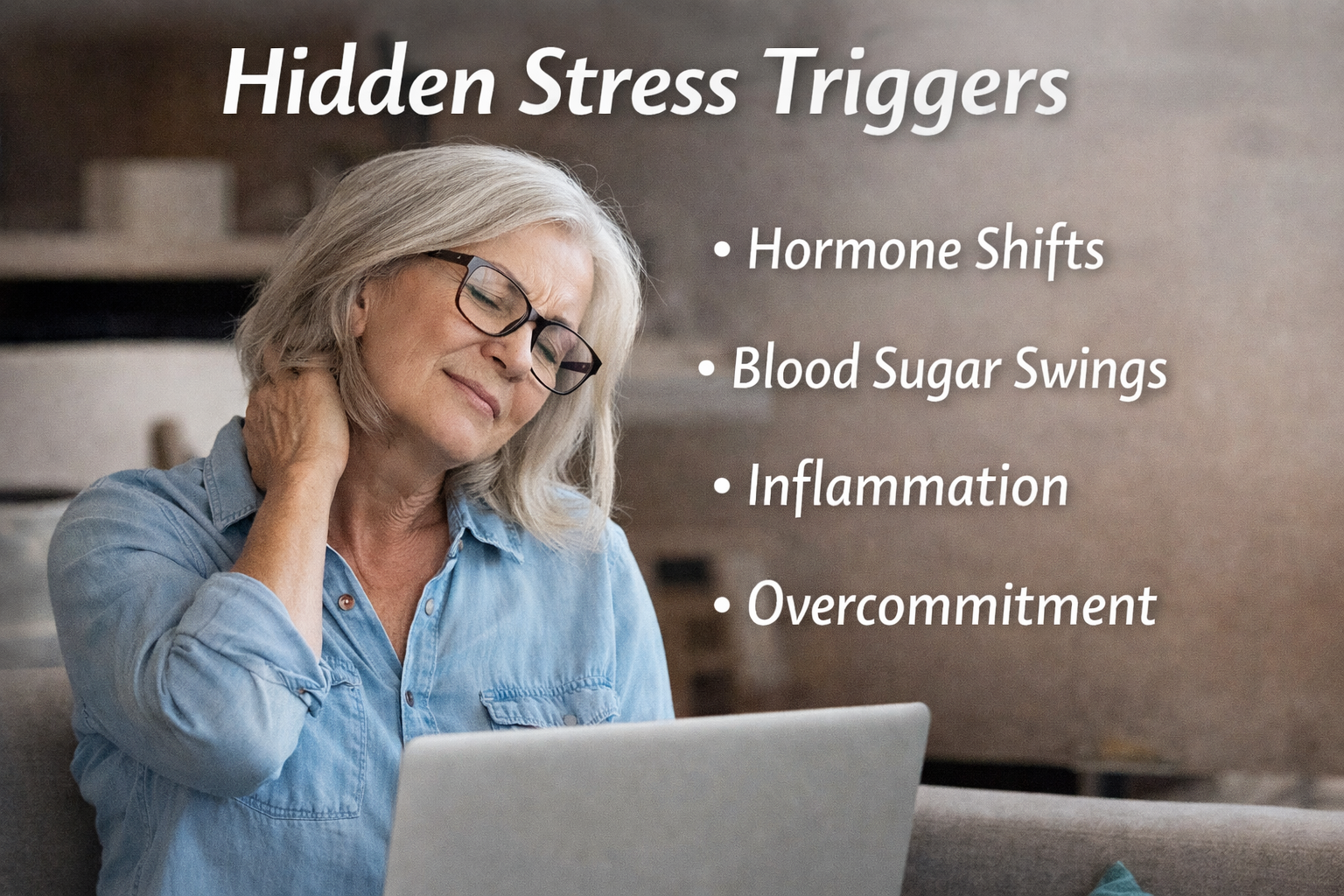
When I say stress, I don’t just mean emotional stress.
Stress can come from many places:
• busy schedules
• poor sleep
• hormone shifts
• inflammation
• blood sugar swings
• chronic overcommitment
• even hidden health imbalances
Your body doesn’t really distinguish between these types of stress.
It simply activates the same biological response — the stress response.
That response involves a hormone called cortisol, which is produced by the adrenal glands.
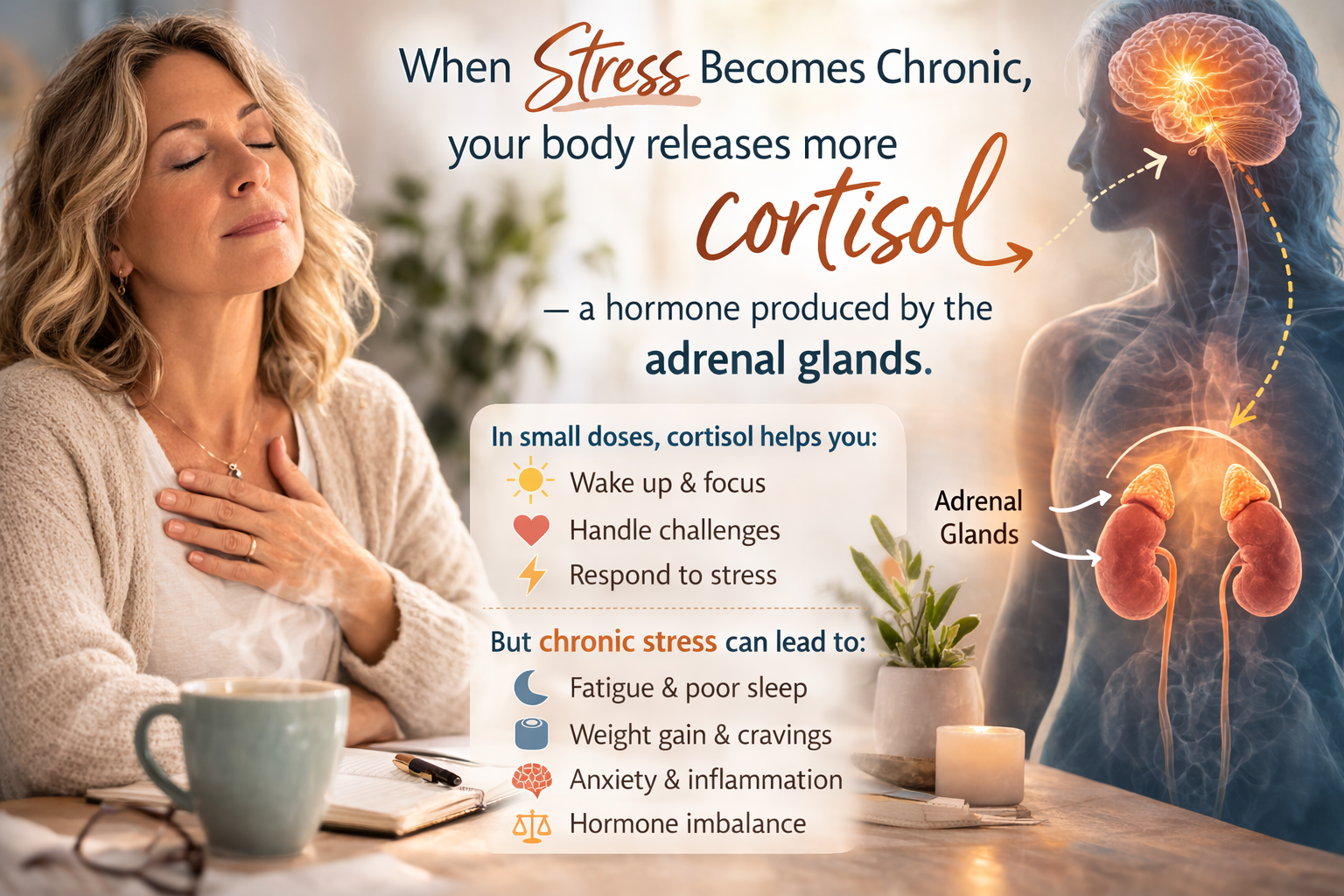
In small doses, cortisol is helpful. It wakes us up in the morning and helps us respond to challenges.
But when stress becomes chronic, cortisol can start affecting many systems in the body.
This is when women often begin experiencing symptoms like:
• fatigue
• brain fog
• sleep disturbances
• stubborn weight gain
• anxiety or irritability
• sugar cravings
• feeling “wired but tired”
And the confusing part is that life may not even feel particularly stressful at the moment.
Many women I work with are incredibly capable. They’ve spent years managing families, careers, responsibilities, and expectations.
They’ve simply become very good at pushing through stress.
But eventually the body starts asking for more support.
Midlife is often the time when the body gently says:
“It’s time to take care of me now.”
The encouraging part is that awareness is the first step toward change.
Once we start recognizing how stress affects the body, we can begin supporting it in very practical ways.
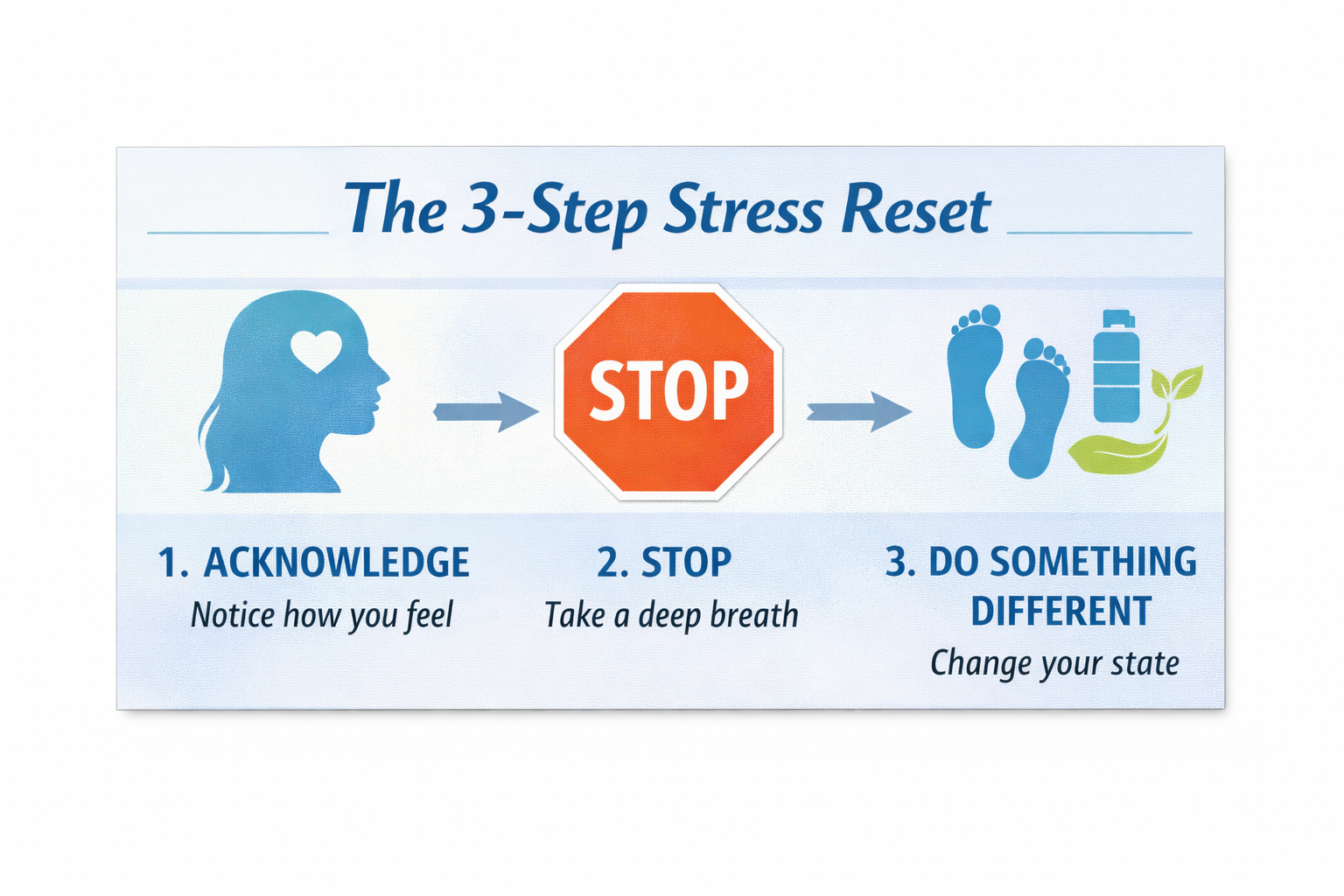
This Week’s Tool: The 3-Step Stress Reset
Our bodies often signal stress before we consciously realize it.
You might notice tight shoulders, shallow breathing, jaw clenching, digestive discomfort, or feeling wired but tired.
When you notice these signals, try this simple reset:
- Acknowledge
Pause and recognize how you’re feeling. Awareness is the first step. - Stop
Take a moment to interrupt the stress cycle. Put the phone down, step away, and take a few slow breaths. I like to visualize a stop sign ! - Do Something Different
Take a small action that shifts your state — stretch, step outside, take a short walk, or drink a glass of water.
Small moments of awareness like this can help your body reset and respond to stress in a healthier way.
Next Week
Next week we’ll talk about something many women find surprising:
How stress quietly affects your gut, thyroid, metabolism, and inflammation — even when you don’t feel stressed.
If You’d Like to Connect
I work with women through my functional wellness practice where we help uncover the root causes behind symptoms like fatigue, hormone changes, inflammation, and weight gain.
We also use advanced testing, including saliva testing to evaluate adrenal function and cortisol patterns throughout the day, along with comprehensive bloodwork.
Take the Next Step Toward Heart Health 💥
Book a Free Call with Thrive Functional Wellness.
In office patients can pair functional care with chiropractic or laser services, while remote clients receive the same in depth testing and personalized support. Be sure to explore our Amazon storefront for practitioner recommended wellness tools.
📞 Call us at 760-777-4177
📍 Visit us at 78370 Highway 111, Suite 285 – La Quinta, CA
📅 Schedule your Free Discovery Call and book your Inflammation Testing today

Sorry, the comment form is closed at this time.